








Heritage
The Lalique Story
Few names in French decorative art are tied so closely to one material. Across three generations of the Lalique family, and the artists who have worked with the house since, glass and then crystal became a language of dancing figures, birds, leaves and flowers that still reads as unmistakably Lalique.
From Jeweler to Glassmaker
René Lalique was born in 1860 in Aÿ, in the Champagne country, and at sixteen was apprenticed to the Paris jeweler Louis Aucoc. By 1881 he was designing freelance for Parisian jewelry houses, and in 1888 he registered the "RL" mark that he would apply to his own creations.
His jewelry, inspired by Antiquity and Japanese art and set with unexpected materials, brought him acclaim at the Paris Universal Exhibition of 1900, the year he was named an Officer of the Legion of Honor. By then he was already experimenting with glass in his workshop.
The turning point came in 1907, when the perfumer François Coty asked him to design bottles. That partnership drew Lalique toward glassmaking on an industrial scale. He opened his first glassworks at Combs-la-Ville in 1909, and in 1922 founded the Verrerie d'Alsace at Wingen-sur-Moder, which remains the only place where Lalique is made.
The Art Deco Years
The 1920s and 1930s were René Lalique's great decades. His work was central to the 1925 Paris Exhibition of Modern Decorative and Industrial Arts, a high point of the Art Deco era. In 1929 he decorated carriages of the Côte d'Azur Pullman Express; a molded panel of blackbirds among vines, designed for that train in 1928, now belongs to the Victoria and Albert Museum in London, and the motif lives on in Merles et Raisins. In 1935 he contributed to the interiors of the ocean liner Normandie and opened a shop on the Rue Royale in Paris.
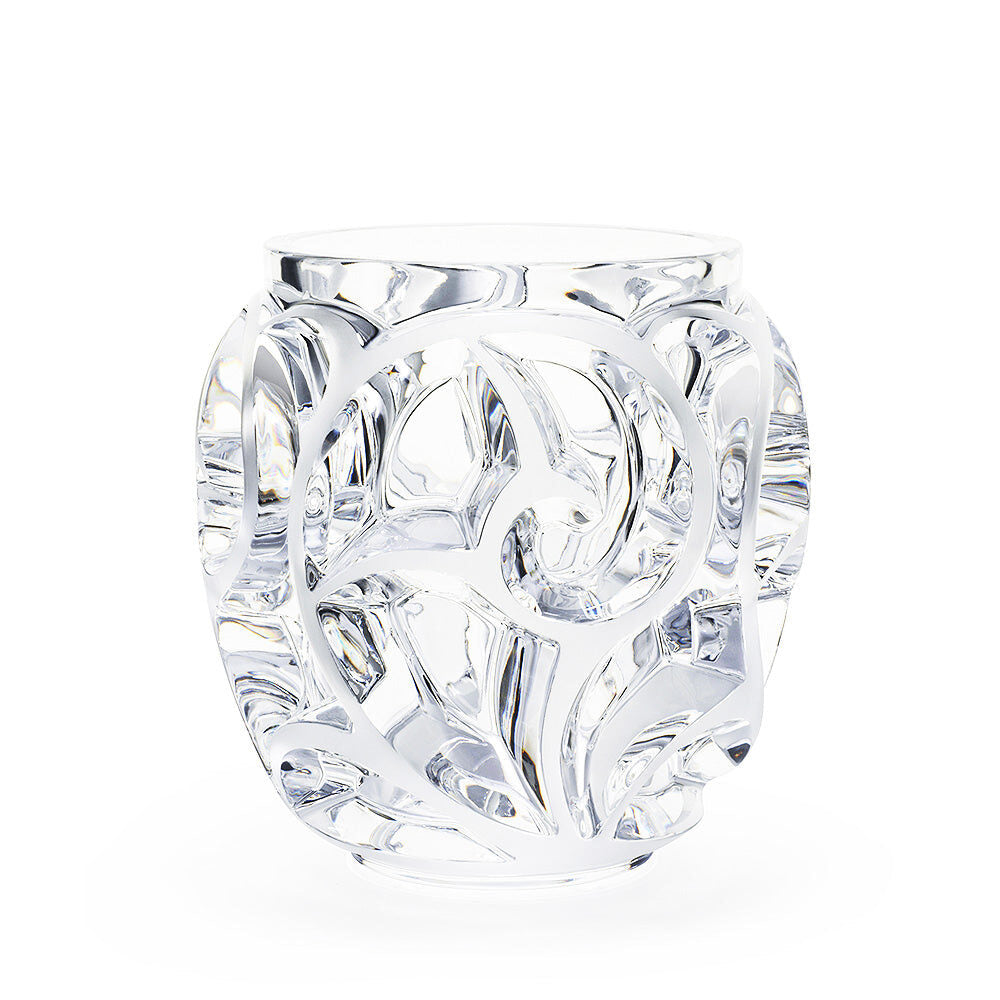
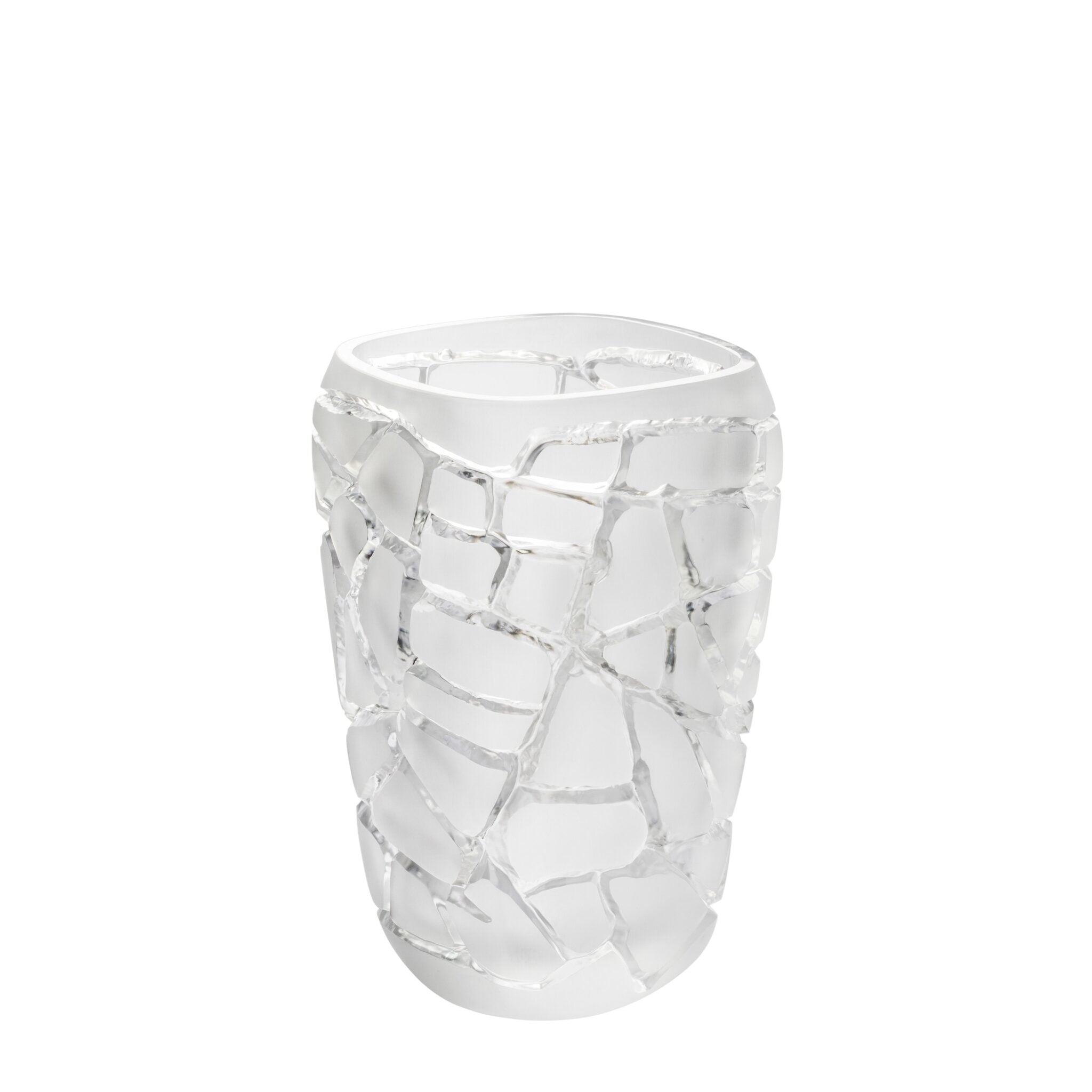
Many of the house's best-loved forms date from these years. The Bacchantes vase, conceived in 1927, wraps the crystal in young priestesses of Bacchus, their satin surface meant to suggest skin. Tourbillons, created in 1926 by René's daughter Suzanne Lalique-Haviland, sweeps around the vase in scrolls inspired by an unfurling fern. The Mossi vase of 1933 sets 96 polished cabochons into satin crystal, so that each one reflects the others like a kaleidoscope.
Marc, Marie-Claude and the Turn to Crystal
When René died in 1945, his son Marc took over. Marc had joined the firm in 1922 after studying at the École des Arts Décoratifs in Paris, and he renovated and modernized the Wingen-sur-Moder factory. In the early 1950s he led the move from glass to crystal, giving the house's sculpted surfaces new depth and brilliance.
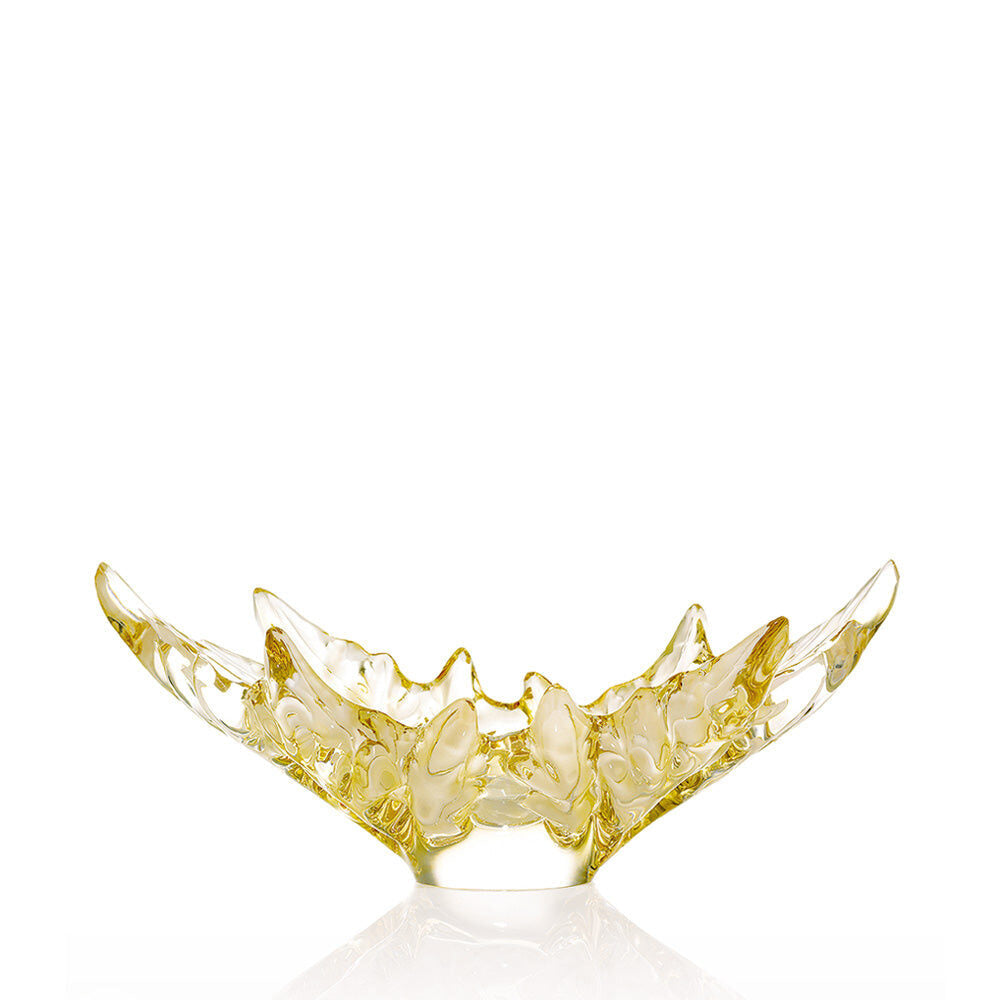
In 1951, walking along the Avenue des Champs-Élysées, Marc was struck by the wind-swept leaves of its plane trees. The result was the Champs-Élysées bowl, in which satin and repolished crystal pick out every vein of the leaves.
After Marc's death in 1977, his daughter Marie-Claude Lalique led the company. She revived jewelry, expanded the fragrance line and, in 1989, created Zeila, a sleek panther whose crystal coat is covered in sculpted spots.
A House That Invites Artists
Since 2008 Lalique has belonged to the Swiss group Art & Fragrance, led by Silvio Denz and now known as Lalique Group. The Musée Lalique opened in Wingen-sur-Moder in 2011, and in 2022 the factory marked its first hundred years. Its artisans still work the material by hand: molten crystal is gathered from the furnace, molded, pressed or blown, and once cooled it is cut, sanded and polished.
The house has also opened its doors to artists from other fields. The architect Zaha Hadid began working with Lalique in 2014, when her Visio and Manifesto vases translated her flowing architecture into crystal. In 2015 Damien Hirst and Lalique introduced Eternal, limited-edition crystal panels built around the butterfly, a motif close to both Hirst and René Lalique.
The wine critic James Suckling helped shape the 100 Points glassware, based on a glass he had used for decades of tastings; its first piece, the Universal Glass, appeared in 2012. And for the house's 130th anniversary in 2018, Hirondelles returned to the swallow, a bird René Lalique placed at the heart of many of his jewels and decorative objects.
Living With Lalique
Lalique crystal is at its best where light can move through it. A Bacchantes vase on a console near a window, a Champs-Élysées bowl at the center of the dining table, or a pair of Hirondelles pieces on a mantel will change character from morning to evening. At the table, 100 Points glasses bring the house's frosted, ribbed stems to everyday wine service.
Lalique's own care advice is simple. Wash glasses by hand, and hold them by the bowl rather than the stem. For decorative pieces, avoid sudden changes of temperature and harsh or abrasive products, and clean gently with a chamois or soft cloth.
Rinse decanters with lukewarm water after use and let them dry upside down. If white limescale marks appear, a short soak in lukewarm water with a little white vinegar, followed by a careful rinse and a soft cloth that leaves no lint, will restore the shine.
Many collectors begin with a single signature shape and build around it, adding a bowl or a pair of candleholders from the same motif over time. Because the house continues to produce designs first drawn by René, Marc and Marie-Claude Lalique, a piece bought today belongs to a lineage that stretches back more than a century.
Lalique crystal is made at Wingen-sur-Moder in Alsace, France, in the glassworks René Lalique founded in 1922. Browse all Lalique vases.
Questions about Lalique, a pattern or a missing piece? We are happy to help:
info@paristableware.com · (201) 652-4233