








Heritage
The Christofle Story
Charles Christofle was only about twenty-five when he took over his family's jewelry business in Paris in 1830, and he began as a jeweler working in gold. What turned a jeweler into France's household name in silver was a bold purchase, a new technology, and a run of royal commissions that put his work on the most closely watched tables of the nineteenth century.
From Jeweler to Silversmith
In 1842 Christofle acquired the French patents for electrolytic gilding and silvering held by Henri de Ruolz and the Elkingtons, bringing electroplating to France. The process lays a fine coat of silver over a base metal, and it allowed the house to make tableware with the gleam of silver for a far wider circle of hosts. By 1846 the workshops were producing silver-plated pieces, and King Louis-Philippe ordered a dinner service for the Château d'Eu in Normandy.
The commission that made the name came in 1851, when Napoleon III ordered a service of some 4,000 pieces, complete with grand table centerpieces. After Charles died in 1863, his son Paul Christofle and his nephew Henri Bouilhet led the firm, and members of the Bouilhet family remained at its head until the 1990s. Production moved to a large factory in Saint-Denis, north of Paris, which opened in 1875; that historic site now houses a museum devoted to the house's goldsmithing.
In 1935 Christofle supplied some 40,000 pieces of silver for the French liner Normandie, which sailed from Le Havre for America that May. Much of the Art Deco silver of that era was designed by Luc Lanel and the Danish silversmith Christian Fjerdingstad. In 1959 the Formes Nouvelles program invited Gio Ponti, Lino Sabattini and Tapio Wirkkala to rethink the house's forms, and over the decades artists such as Jean Cocteau and Man Ray also worked with Christofle.
Patterns With a Past
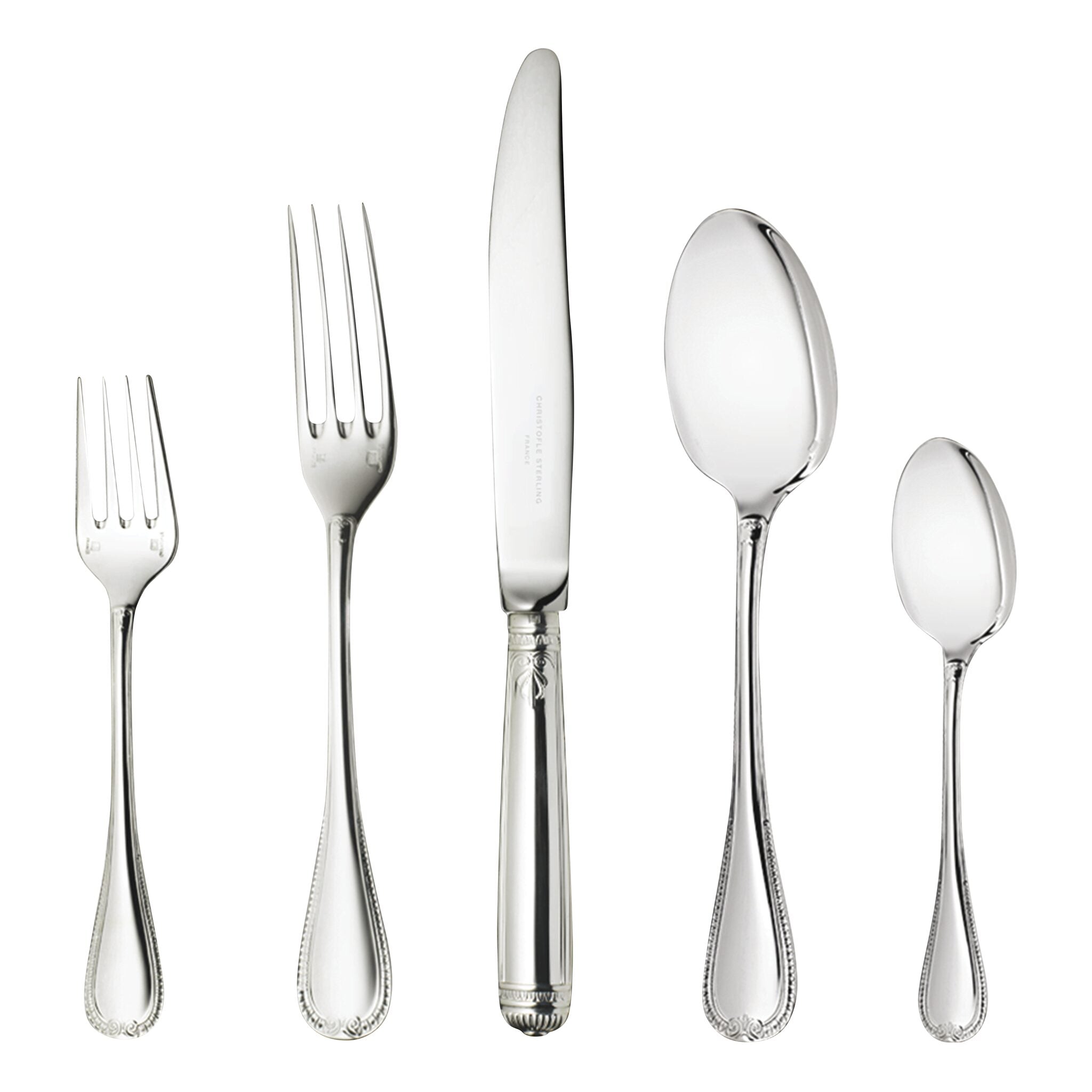
Many Christofle patterns carry a piece of French history in their names. Cluny, one of the house's earliest flatware patterns, dates to 1862 and takes its name from Cluny Abbey; redesigned in 1964, it keeps the plain, softly rounded lines of the Louis XIII style. Marly recalls the Château de Marly that Louis XIV built as a retreat near Paris, with acanthus leaves and shells in the asymmetrical spirit of the Rococo. Malmaison is named for the country house of Napoleon and Empress Josephine, and its palmettes and water leaves follow the Empire style.
The twentieth century added its own classics. America was created by Luc Lanel in 1933, an Art Deco design defined by cut sides and crisp angles. Fjerdingstad revives pieces that Christian Fjerdingstad drew between 1924 and 1940, including his nesting Gigogne coffee pot of 1926. Albi, introduced in 1968, borrows the straight lines of the nave of Albi Cathedral.
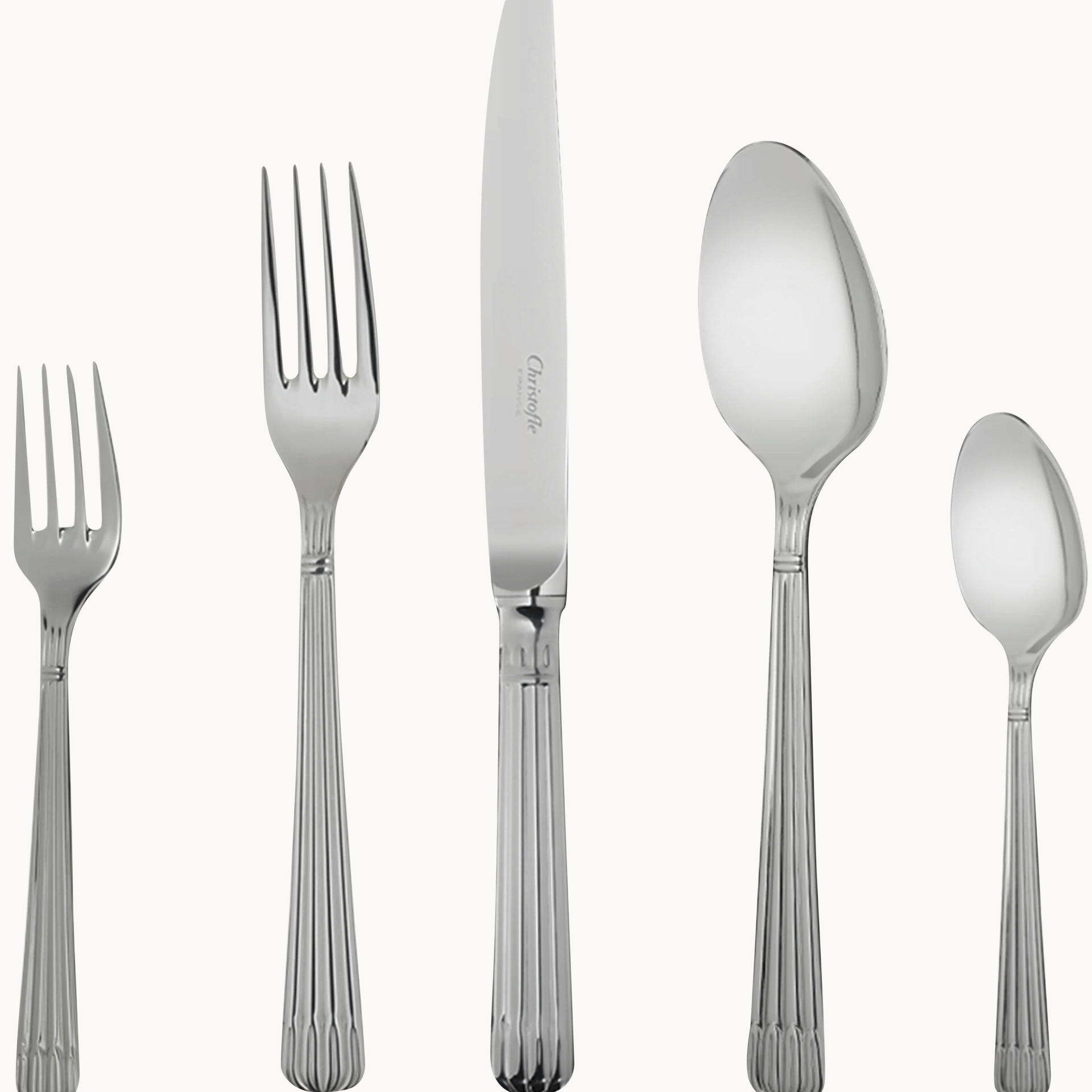
Contemporary designers continue the conversation. Bernard Yot designed Aria in 1985, wrapping each handle with a bundle of reeds tied at top and bottom, and followed it in 1986 with Talisman, which pairs silver with bands of hand-applied lacquer in a range of colors. Andrée Putman gave the house Vertigo, and Marcel Wanders created Jardin d'Eden in 2010, the only Christofle pattern whose scrolling arabesques cover every piece from handle to bowl.
Made by Hand in Normandy
In 1971 Christofle opened a new factory at Yainville, in Normandy, and since 2006 it has been the house's only manufacturing site. Christofle describes its manufacturing as entirely handmade. Craftspeople there practice the traditional trades of spinning, embossing, carving and engraving, and the house's master goldsmiths pass their skills from teacher to apprentice.
Setting and Caring for Silver
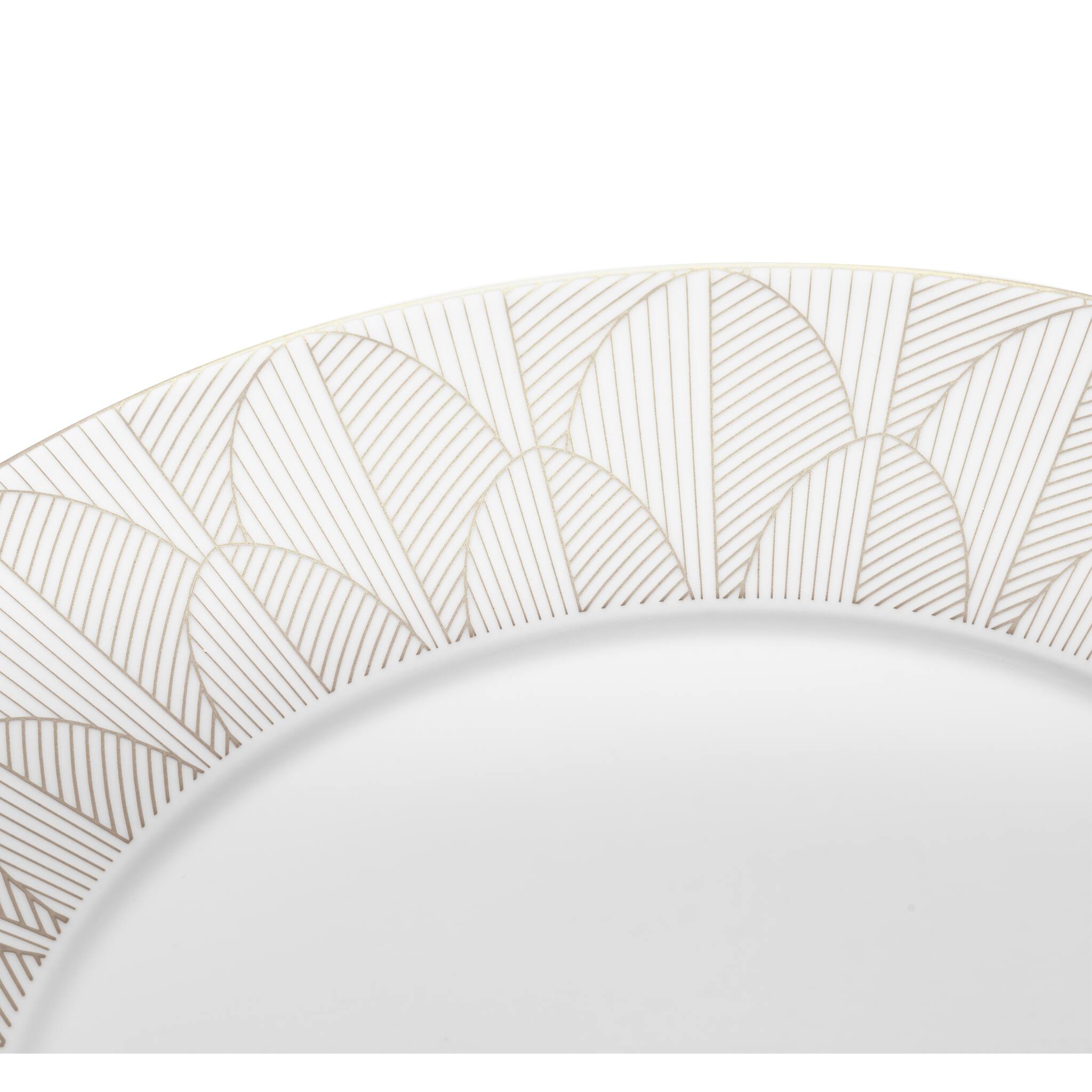
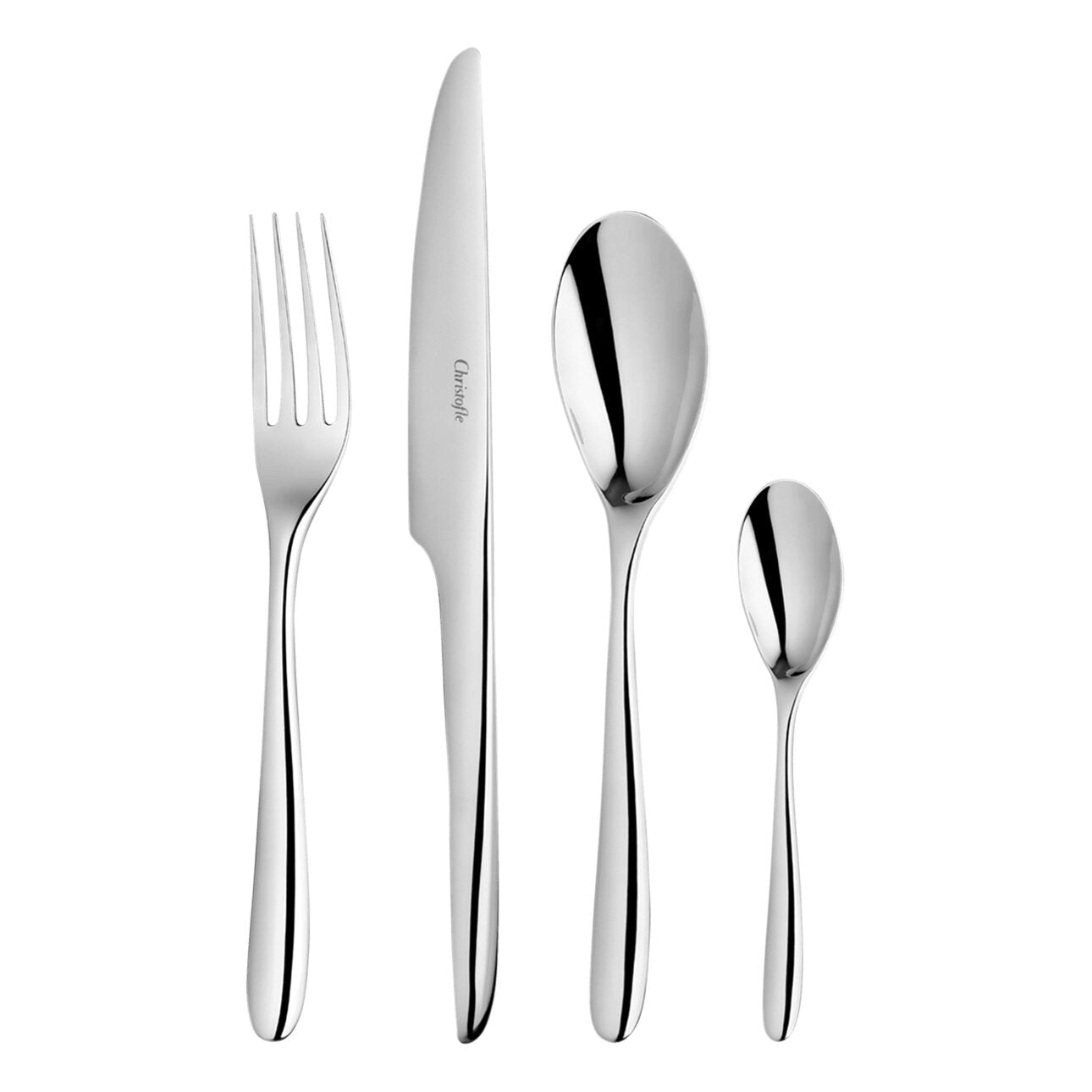
Christofle flatware is meant to be used, not kept behind glass. A classic service can be built a place setting at a time, then rounded out with serving pieces, and the patterns sit comfortably beside both traditional porcelain and modern stoneware. Mixing a heritage design such as Cluny with a sculptural candlestick or a contemporary bowl is a very Christofle way to set a table.
Between meals, store silver and silver plate in a dry place, apart from stainless steel and other metals, which can scratch or mark it. Christofle's own storage boxes and pouches are lined with an anti-tarnish fabric that slows oxidation. For routine care, a silversmith's glove or a soft chamois restores the shine quickly; when tarnish does appear, a dedicated silver cleaner followed by a rinse and a careful dry will bring the surface back. With that simple attention, a Christofle service grows richer with every family occasion.
Questions about Christofle, a pattern or a missing piece? We are happy to help:
info@paristableware.com · (201) 652-4233