







Heritage
The Haviland Story
Haviland began with a question from a customer. In New York, where David Haviland had opened an import business in 1838, a client asked him to replace a broken saucer. The piece turned out to be Limoges porcelain, and Haviland was so taken with its pure white body that he decided to go to the source. The house he built there became a bridge between French craftsmanship and American tables that has lasted for more than 180 years.
An American in Limoges
In 1842 David Haviland settled in Limoges and set up his own manufacture, the first established by an American in Europe. He understood that his customers back home preferred English styles of decoration, so he trained decorators to blend English and French tastes for the American market. The business grew quickly, and by 1853 it was the largest importer of French porcelain into the United States. Haviland is also credited with inventing enluminage, a hand-painting technique that changed the way porcelain was decorated.
His sons carried the work forward, with Charles Edward Haviland overseeing the factory in France and Theodore Haviland managing sales in America. The company was renamed Haviland & Co. after the Civil War, and from 1865 it produced its porcelain entirely in-house.
The Artists of Auteuil
In 1872 Haviland opened an artists' studio on rue Michel-Ange in Auteuil, on the western edge of Paris, under the direction of the engraver Félix Bracquemond. Édouard and Albert Dammouse, Ernest Chaplet, the sculptor Jules Desbois and Paul Gauguin all worked there, and together the studio produced more than 400 designs. That spirit of collaboration continued in the 20th century. The animal sculptor Édouard-Marcel Sandoz brought a sculptor's eye to Limoges porcelain, and Suzanne Lalique, daughter of René Lalique, created Art Deco shapes and decorations for the house.
Haviland porcelain also found its way into the White House. Six American presidents chose Haviland, from Abraham Lincoln in 1861 to Franklin D. Roosevelt in 1938. The service made for Rutherford B. Hayes between 1877 and 1881 numbered more than 1,000 pieces, painted after watercolors by the artist Theodore Davis. In Paris, Haviland has set the tables of the Ritz Paris for more than a century and continues to create collections for the hotel. In 1992 the manufacture moved into a modern factory in Limoges.
Patterns With a Past
Many Haviland patterns come straight from the archives. Dammouse is named for Édouard Dammouse, who painted the original watercolor for Haviland around 1880. Inspired by Japanese prints and silks, it pairs ornate flowers with touches of gold. Impératrice Eugénie traces back to a design by Léonce Ribière for the Empress Eugénie, now held in the Haviland porcelain museum in Limoges. His pupil Lassère reworked the model, and Haviland has produced the violet-strewn pattern since 1967.
Vieux Paris Vert also came out of the archives. In the 1960s, a 1911 model called "Vieux Paris" was rediscovered and chosen for reproduction. Drawing on late 18th-century Parisian porcelain, it combines garlands of gilded leaves, cornflowers, a green ribbon and two gold borders. The hotel's own collections, such as Marthe Ritz Paris, bring a touch of that famous address to the table at home.
Haviland looks forward as well as back. Le Brésil by La Manufacture Zuber was created with the French wallpaper house Zuber, which still prints panoramic decors with traditional woodblocks. The pattern draws on a panoramic scene of 20 panels designed by Joseph Fuchs in 1862, full of tropical birds, rivers and lush greenery. Infini White belongs to the contemporary Infini family, whose sun-inspired engraving is cut into the porcelain itself. In white or gray it suits everyday meals, while the gold and platinum versions, applied by hand on some pieces, dress the table for celebrations.
Building a Haviland Table
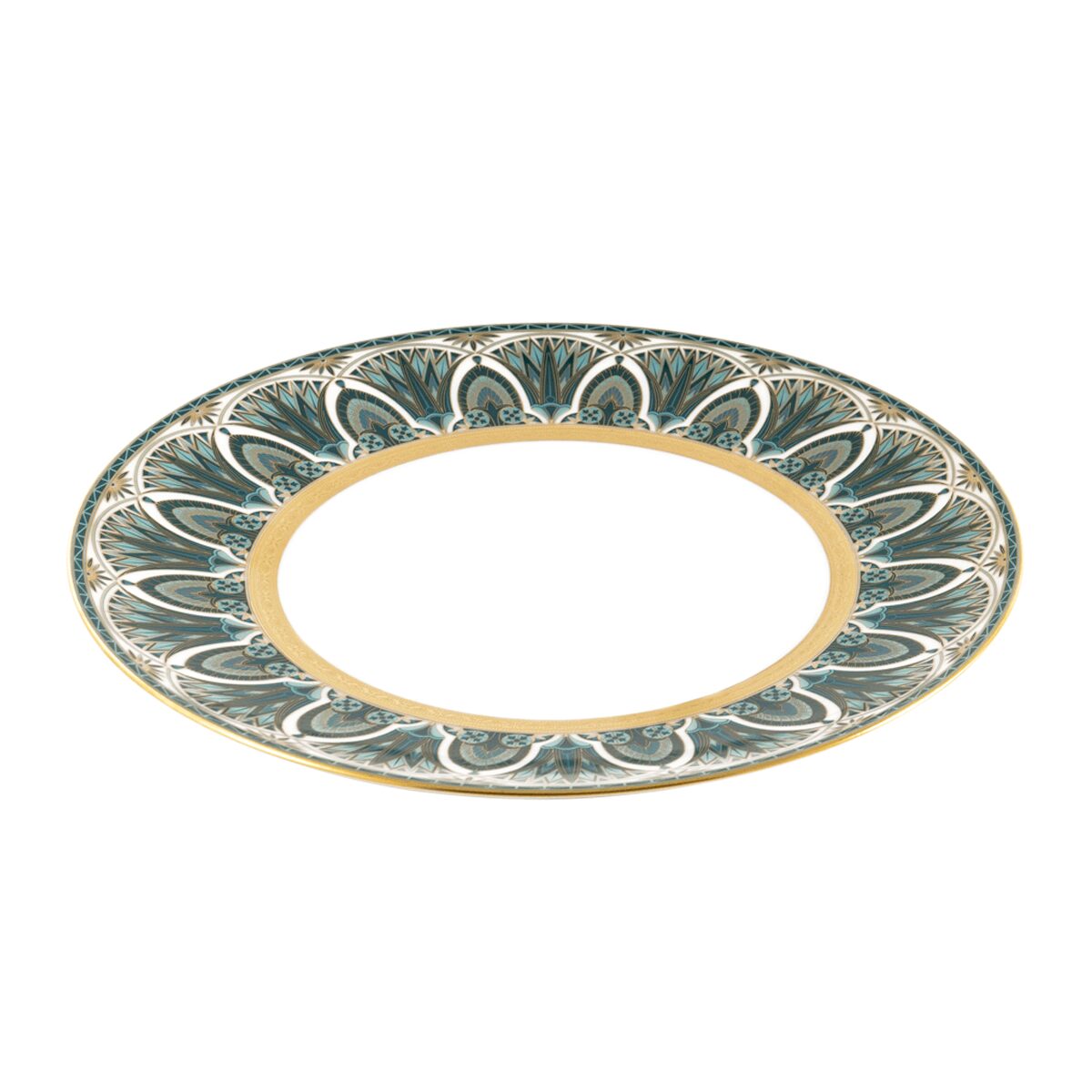
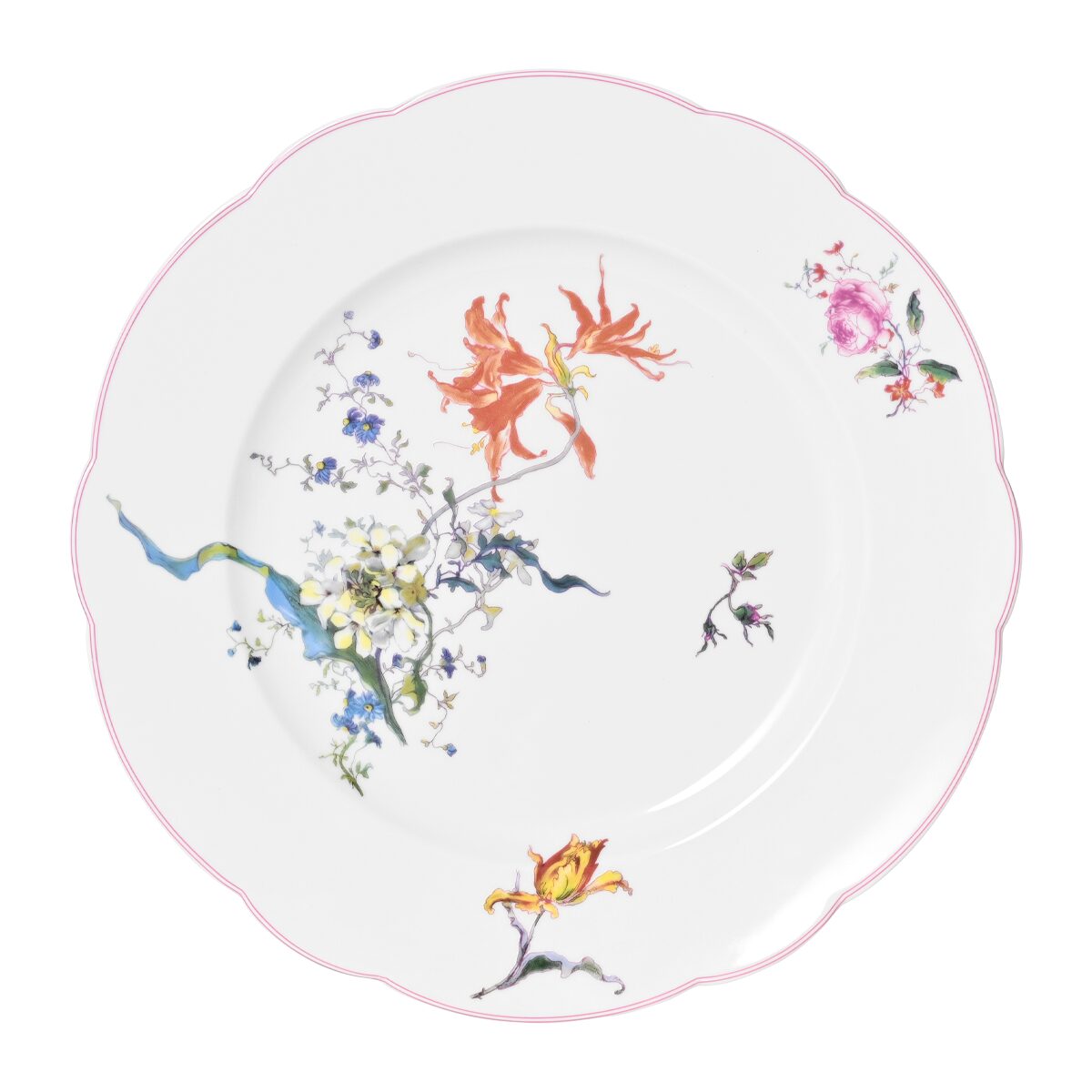
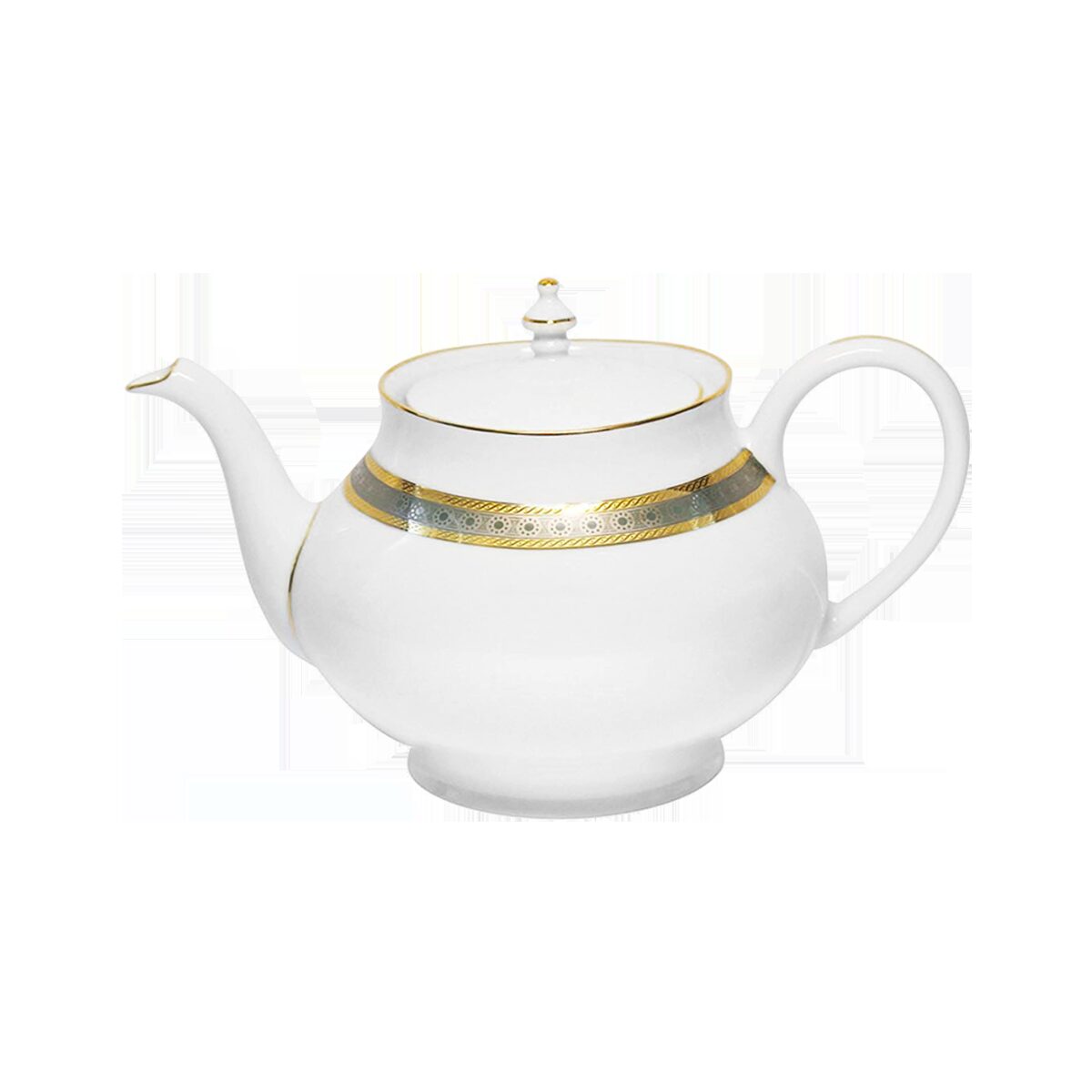
Because Haviland patterns range from archival florals to quiet modern relief, they lend themselves to layering. An engraved Infini charger beneath a painted heritage plate, or a Fleurs d'Auteuil dessert course after a white main course, gives a table depth without clutter. Teapots, cups and coffee pieces make a natural starting point for a collection and can be added to over the years.
Pieces decorated with gold or platinum deserve gentle treatment. Wash them by hand with a soft sponge and mild detergent, keep them out of the microwave, and store decorated plates with a soft cloth or felt between them to protect the surface. Treated this way, Haviland porcelain is made to be used, enjoyed and handed down.
Questions about Haviland, a pattern or a missing piece? We are happy to help:
info@paristableware.com · (201) 652-4233