










Heritage
The Moser Story
Moser crystal carries the story of one family and one spa town, told in glass for more than a century and a half. What began as a young engraver's shop became a glassworks whose pieces were chosen by emperors, kings and presidents, and whose colors and cuts are still worked by hand today.
The Engraver of Karlsbad
Ludwig Moser was born in Karlsbad in 1833. He was not yet twenty-four when he opened his first engraving workshop and glass shop in the city center, in a house known as "The City of Weimar."
Recognition followed. In 1873 Moser received a medal at the Vienna International Exhibition and became a supplier to the court of Emperor Franz Joseph I. Twenty years later, on October 16, 1893, his new glassworks in the Dvory district of Karlsbad was approved, and the business became Ludwig Moser & Sons. From that year on Moser worked only in lead-free crystal, a material prized for its purity, brilliance and hardness, but one that is hard to cut. Royal titles followed, including court supplier to the Persian Shah in 1901 and to King Edward VII in 1908.
Leo Moser and the Art of Color
Ludwig's son Leo Moser became technical lead of the glassworks in 1908 and took over its artistic direction after his father's death in 1916. In 1911 he and his glassmakers created Splendid, a drinking set decorated with a demanding diamond cut and 24-karat gold, and in 1919 he patented "Oroplastique," a method of etching, gilding and polishing that was used on Splendid and other lines.
Leo also worked with scientists in Berlin to develop crystal colored with rare-earth elements, named after gemstones and semi-precious stones. The most famous, alexandrite, appears to change its shade as the light changes. The Pope collection of 1916 became the model for Lady Hamilton, known for its so-called "papal cut."
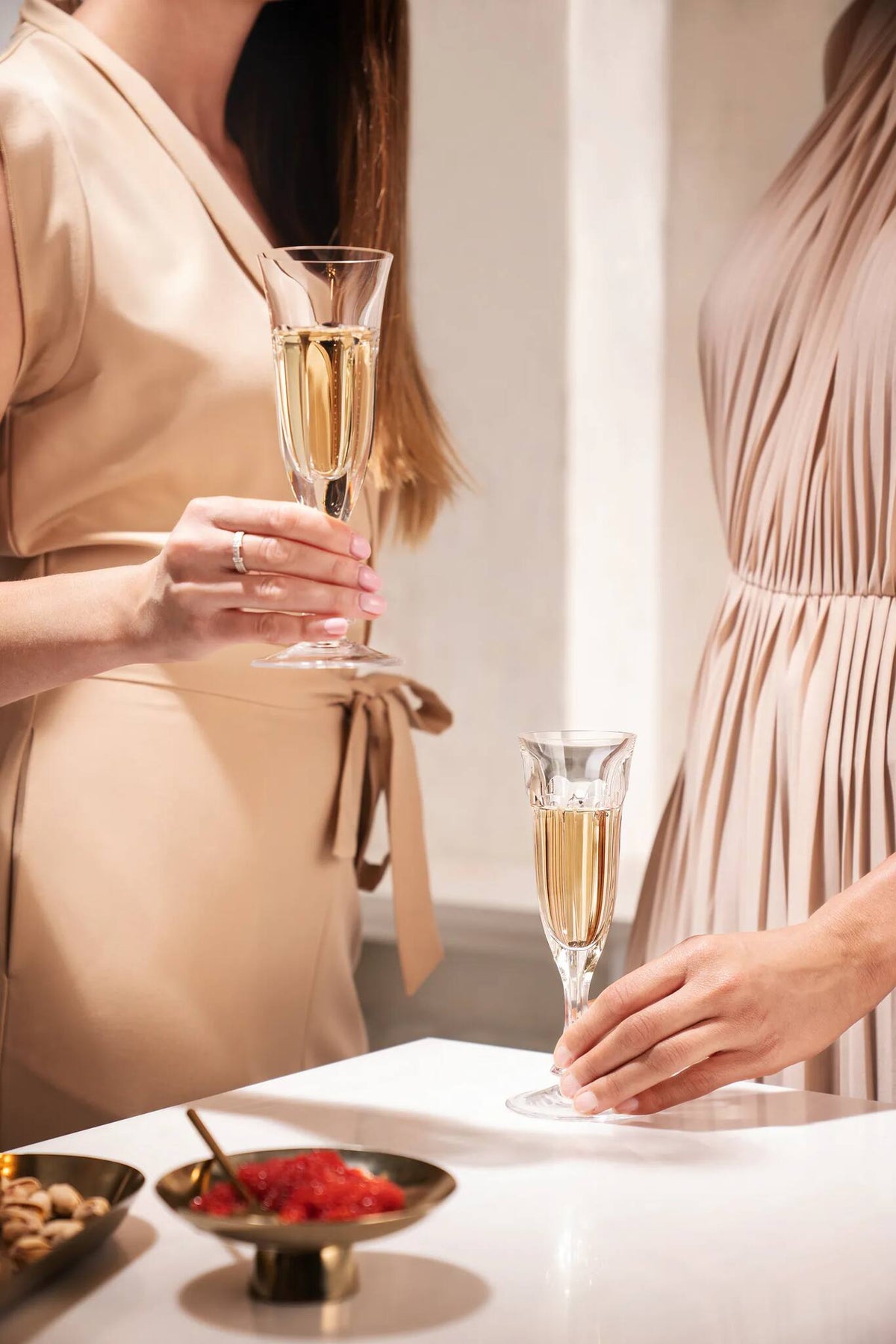
In 1947, the Czechoslovak president Edvard Beneš gave the future Queen Elizabeth II and Prince Philip a Splendid set as a wedding gift, and in 2007 Splendid pieces engraved with the royal coat of arms graced their diamond wedding anniversary celebration. You can see the same gold-decorated tradition in our Moser Splendid collection.
Signature Collections, Old and New
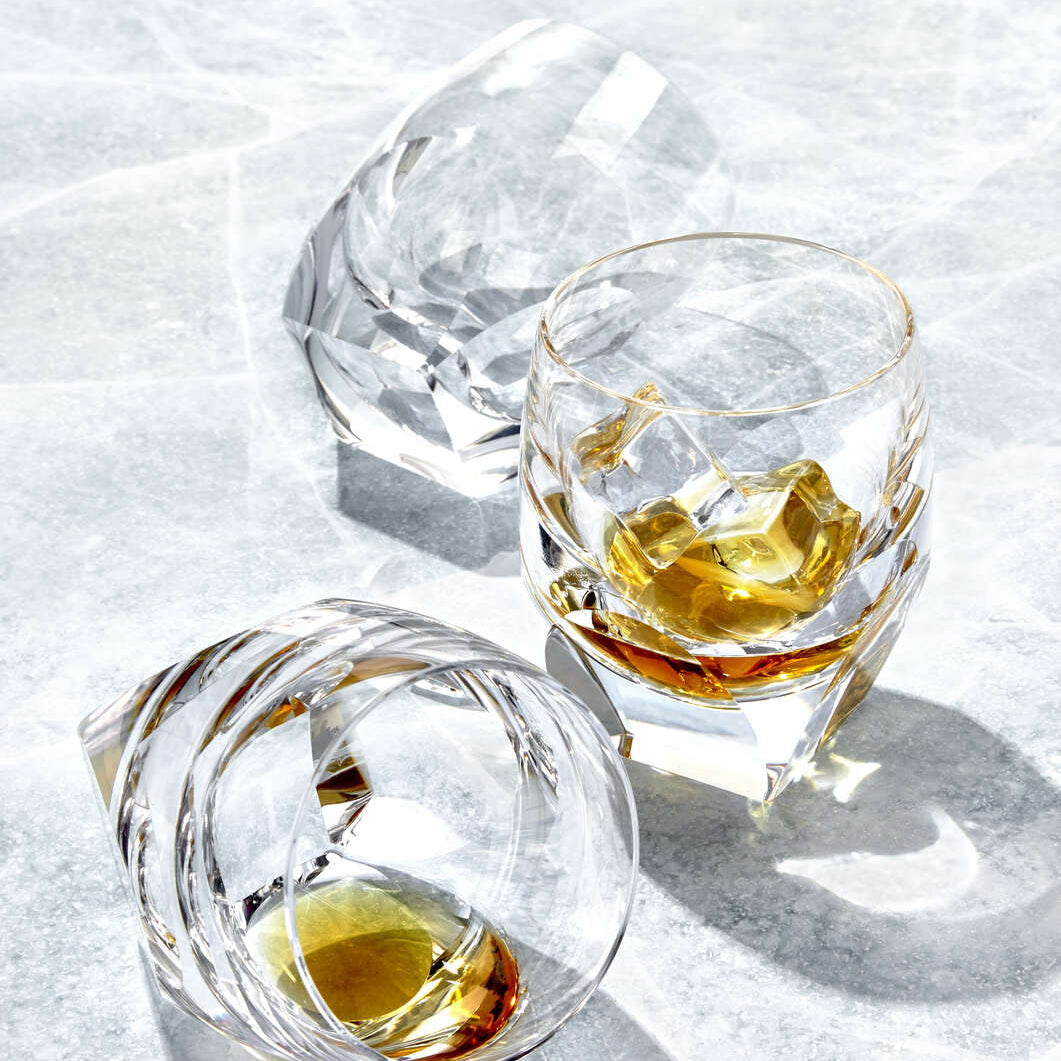
Some Moser designs have remained in production for generations. Rudolf Eschler's Bar set pairs square bases with round bodies, and its cut creates an optical effect that recalls melting ice cubes; in 2024 Moser marked its ninetieth birthday with a limited edition. The Whisky Set has kept the same look since its introduction, built on the contrast between a massive base and light, thin sides.
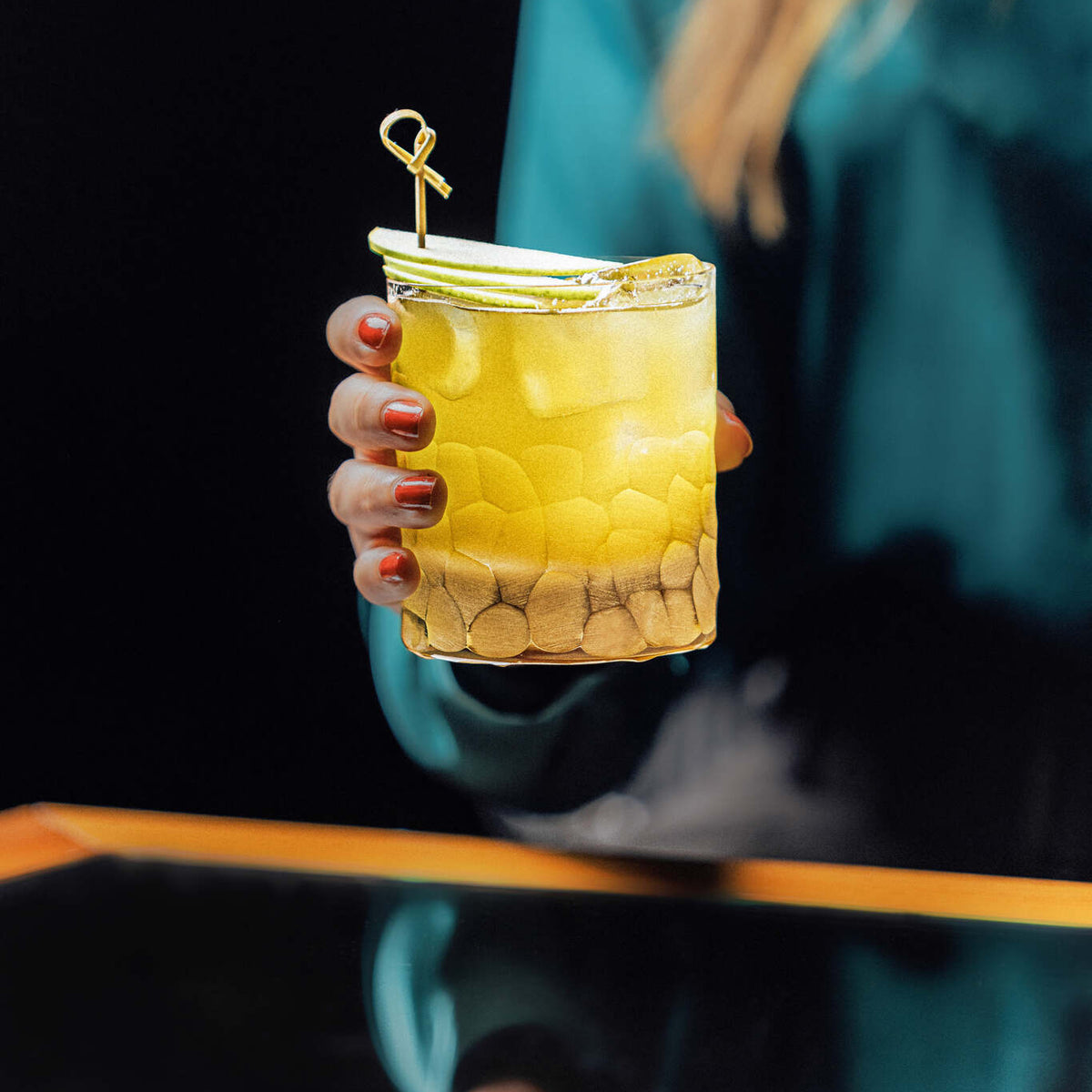
Recent decades have added a new chapter. Lukáš Jabůrek, the glass artist and cutter who served as Moser's art director from 2013 to 2018, designed Fluent, with thin walls rising from a heavy base, and Optic. His Caorle vase, combining an ocean green underlay with rose and cut in a six-sided pattern, won an award in the Artisanal category of the 2019 Tableware International Awards of Excellence. The designer Patrik Illo created Oeno in cooperation with professional sommeliers, giving its glasses a shape derived from a droplet. Moser itself describes Optic and Oeno as collections Leo Moser might have created had he founded the glassworks today.
Living With Moser Crystal
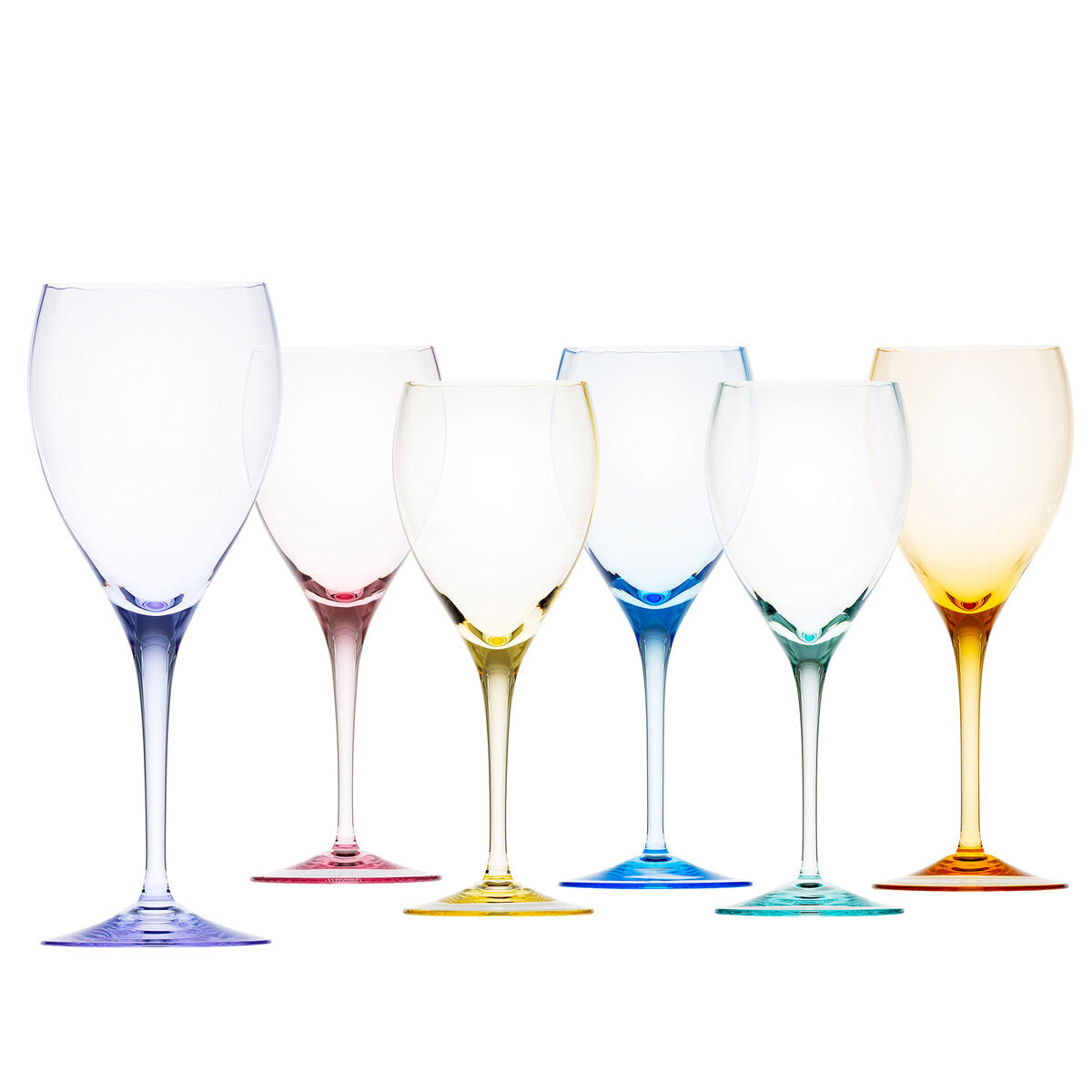
Every Moser piece is still made by hand, and a single vase can pass through the hands of more than forty glassworkers. That handwork is part of the pleasure of using it. A set of six glasses in different Moser colors makes a lively table where each guest can recognize their own glass, while clear crystal suits formal dinners and pairs easily with gold-decorated pieces.
For whisky, the heavy bases of the Bar and Whisky Set glasses feel steady in the hand. For wine and Champagne, look to Oeno, shaped with the advice of sommeliers, or to the slender Fluent glasses. A cut vase on a sideboard or dining table carries the same craft beyond the bar.
Hand-made crystal deserves gentle care. Wash pieces by hand in lukewarm water with a mild detergent, dry them with a soft cloth, and store glasses upright. Treated this way, Moser crystal is made to be used for celebrations and handed down, just as the Splendid sets of royal tables have been.
Questions about Moser, a pattern or a missing piece? We are happy to help:
info@paristableware.com · (201) 652-4233