



Heritage
The Caran d'Ache Story
Few writing instruments carry their history as openly as a Caran d'Ache pen. Its hexagonal silhouette is recognizable at a glance, and the name engraved on it is a small story about drawing, wit and the simple word for "pencil."
A Name Borrowed From a Cartoonist
The company was established in Geneva in 1915 as Fabrique Genevoise de Crayons Ecridor, a pencil maker. In 1924 Arnold Schweitzer took over the firm and renamed it Caran d'Ache, after the pen name of Emmanuel Poiré, the Russian-French satirical cartoonist. Poiré had himself taken the pseudonym from karandash, the Russian word for pencil.
Pencils led naturally to other instruments. In 1929 the company introduced the Fixpencil, a mechanical pencil invented by Carl Schmid, and in 1953 came the Ecridor, which grew from a pencil into a luxury ballpoint pen. The 849 ballpoint followed in 1969. In June 2012 the owner, Jacques Hübscher, handed the management of the company to his daughter, Carole Hübscher.
The Art of Haute Écriture
Caran d'Ache has been designing and producing what it calls Haute Écriture instruments since 1930, and it still develops and manufactures them in its Geneva workshops alongside its everyday writing and fine art ranges. The company's expertise in color, shared with its pencils and paints, allows it to create these instruments in a multitude of shades.
Guillochage is central to the look. The company uses several techniques to create subtle plays of light and shadow on a pen's body: diamond guillochage for a sparkling finish, laser engraving for shallow, matte detail, chiseling for slender, angular motifs and milling for complex, rounded patterns. Gold, platinum and rhodium finishes are brought to life across the Ecridor, Léman and Varius collections.
Lacquer demands the same precision. The house works in gloss, matte and satin varnishes, and it also masters the ancestral art of Chinese lacquer, drawn from the sap of the Chinese lacquer tree and applied in many painstaking layers. Caran d'Ache describes itself as one of the only companies in the West to work this material, a skill it has practiced for more than 30 years. Each Haute Écriture instrument is assembled by hand.
The Signature Collections
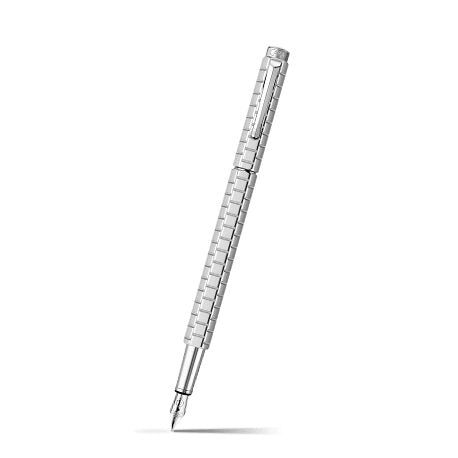
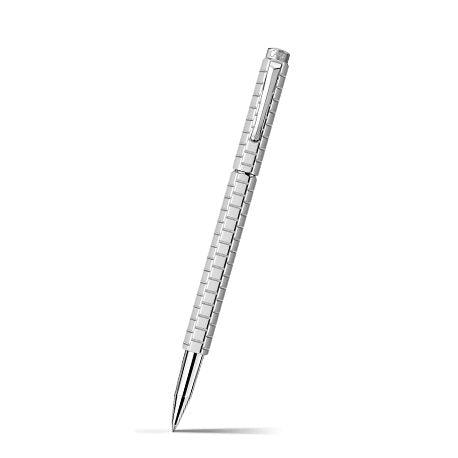
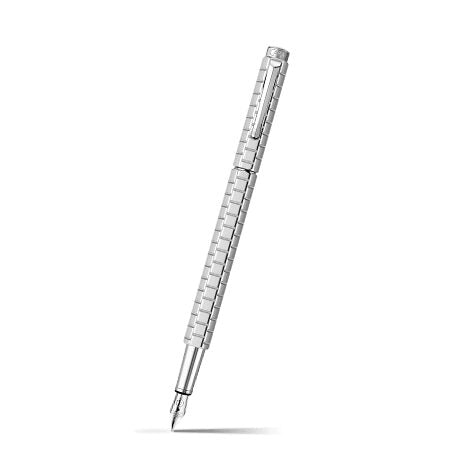
Ecridor has been part of the house since 1953. Its hexagonal body is finely engraved so that it is pleasant to the touch, making it a showcase of the company's guillochage, and themed editions explore motifs from motor racing to golf and Milanese mesh.
Léman is an ode to lakeside settings, designed and produced from start to finish in Geneva. Its lacquered bodies are paired with silver-plated, rhodium-coated details and topped with a lacquered button in a matching color; the Bleu Marin edition, for example, layers translucent navy lacquer over a milled guillochage that suggests sailboats moving across the water. Léman Slim carries the same character in a finer profile.
Varius is the house's celebration of precious materials and traditional know-how. Versions such as China Black wrap a brass body in true Chinese lacquer finished with gold-plated details, while other editions explore carbon, ebony and other noble materials.
The ballpoints in these collections are fitted with the Goliath refill, the company's giant cartridge, which can write up to 600 A4 pages. For fountain pens, Chromatics inks come in a palette of twelve colors, from Cosmic Black and Magnetic Blue to Electric Orange and Divine Pink, in 50 ml bottles shaped like a hexagonal glass prism with an enlarged neck for filling larger pens.
Choosing and Caring for a Caran d'Ache Pen
Choosing a pen is personal. A fountain pen rewards those who write by hand every day and enjoy the variety of ink colors; a ballpoint is practical for travel and signing; a rollerball offers a smooth line with little pressure; and a mechanical pencil suits sketching and note-taking. An Ecridor ballpoint makes a natural first piece, and a fountain pen from Léman or Varius a rewarding next step.
As a gift, a fine pen marks graduations, promotions, retirements and milestone birthdays, and pairing it with a case from the Leather Goods collection gives it a home on a desk or in a briefcase. A few simple habits keep any pen in good order: cap a fountain pen when it is not in use, refill it with ink made for fountain pens, store pens in a case or pen tray rather than loose in a bag, and wipe lacquered and plated surfaces with a soft, dry cloth. Treated this way, a Caran d'Ache instrument becomes a lifelong writing companion.
Caran d'Ache was founded in Geneva in 1915 and took its present name in 1924. Caran d'Ache pens by type: fountain pens, ballpoint pens, rollerball pens and mechanical pencils.
Questions about Caran d'Ache, a pattern or a missing piece? We are happy to help:
info@paristableware.com · (201) 652-4233