






Heritage
The Raynaud Story
Raynaud is a story of three generations of one family, each leaving its own mark on Limoges porcelain. A well-traveled salesman founded it, his painter son modernized it, and a grandson opened its doors to some of the most inventive designers in French decoration. Through every chapter, the house has kept its craft and its workshops in Limoges.
A Salesman With an Eye
Martial Raynaud knew porcelain from the selling side first. From the late 19th century he traveled widely as a porcelain representative, bringing Limoges porcelain to a wealthy international clientele. An entrepreneur and an aesthete who spoke several languages, he decided in 1911 to open his own decoration workshop in Limoges. In 1919, after early success, he bought the Montjovis factory and reorganized it completely to found Raynaud porcelain.
His eldest son, André, learned drawing and oil painting at the factory. In 1937, at just 18, he presented two services to his father and won a silver medal with them at the international exhibition of arts and techniques in Paris. When Martial died in 1952, André took over. He modernized the company, renewed the collections with new shapes, and worked with artists and designers including Jean Cocteau, Roger Tallon and Salvador Dalí.
The Third Generation
Bertrand Raynaud, the youngest of André's five children, began working alongside his father in 1982 and took the helm about a decade later. His guiding idea is that the vessel must always suit what it holds, and he built collaborations around it: with the florist Christian Tortu, with the decorator Alberto Pinto, and with the chef Thomas Keller, with whom he designed the Hommage collection. In 1992 the silversmith Ercuis took a stake in the company, and an Ercuis-Raynaud boutique later opened in Paris.
How a Raynaud Piece Is Made
Every new shape starts with a master modeler, who sculpts the original by hand 12 to 14 percent larger than the finished piece to allow for shrinkage in the kiln. From that model a master mold, called the "mother," is made to produce the working molds. The white porcelain is produced to strict specifications by a partner factory that holds the Limoges label.
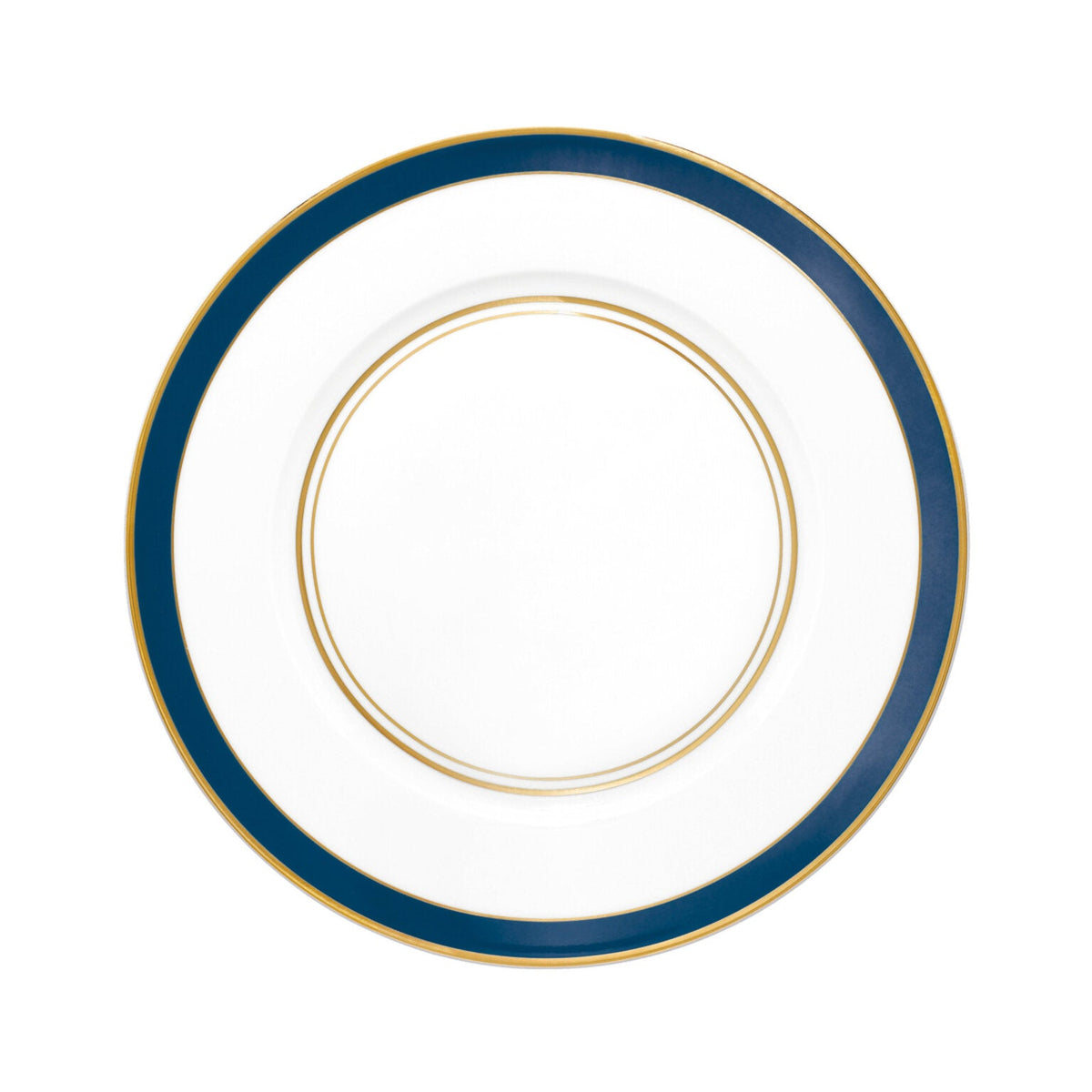
Decoration is where the Raynaud hand shows most clearly. Printed designs are applied by hand, with every contour and relief carefully covered. Painters add the fine lines on plate rims and the ornaments on handles and lid knobs.
Gold and platinum leave the kiln with a matte surface and are sandblasted to bring back their shine. For the most elaborate Prestige pieces, motifs are built up with relief paste and gilded or dusted with pure gold or platinum, or engraved and covered with layers of shiny and matte gold before being polished and burnished with agate and sanguine stones.
Hand-painted decorations are fired at around 800°C (about 1,470°F) and others at around 1,200°C (about 2,190°F). Raynaud received the "Porcelaine de Limoges" geographical indication in 2018, which covers porcelain made and decorated in the Haute-Vienne, and holds the French state's Living Heritage Company label.
The Patterns
Minéral Irisé, designed by Thierry Cheyrou, is engraved with a subtle texture inspired by stone and plant forms. Iridescent pigments are laid over a matte ground, so the surface shifts as the light moves, in shades from sky blue and celadon to pearl, copper and black, alongside metallic versions.
Cristobal was designed by Alberto Pinto around coral. Its original coral red came from one of the vintage services Pinto loved to collect, and the color is never applied evenly, gathering on handles and knobs and spreading like watercolor across the plates. Ultramarine and emerald versions followed. Paradis, created with the English decorating house Fromental from its chinoiserie wallpaper, fills white or turquoise porcelain with birds of paradise and butterflies. Harmonia takes its decoration from an 18th-century Chinese service shown at the Musée Guimet in Paris.
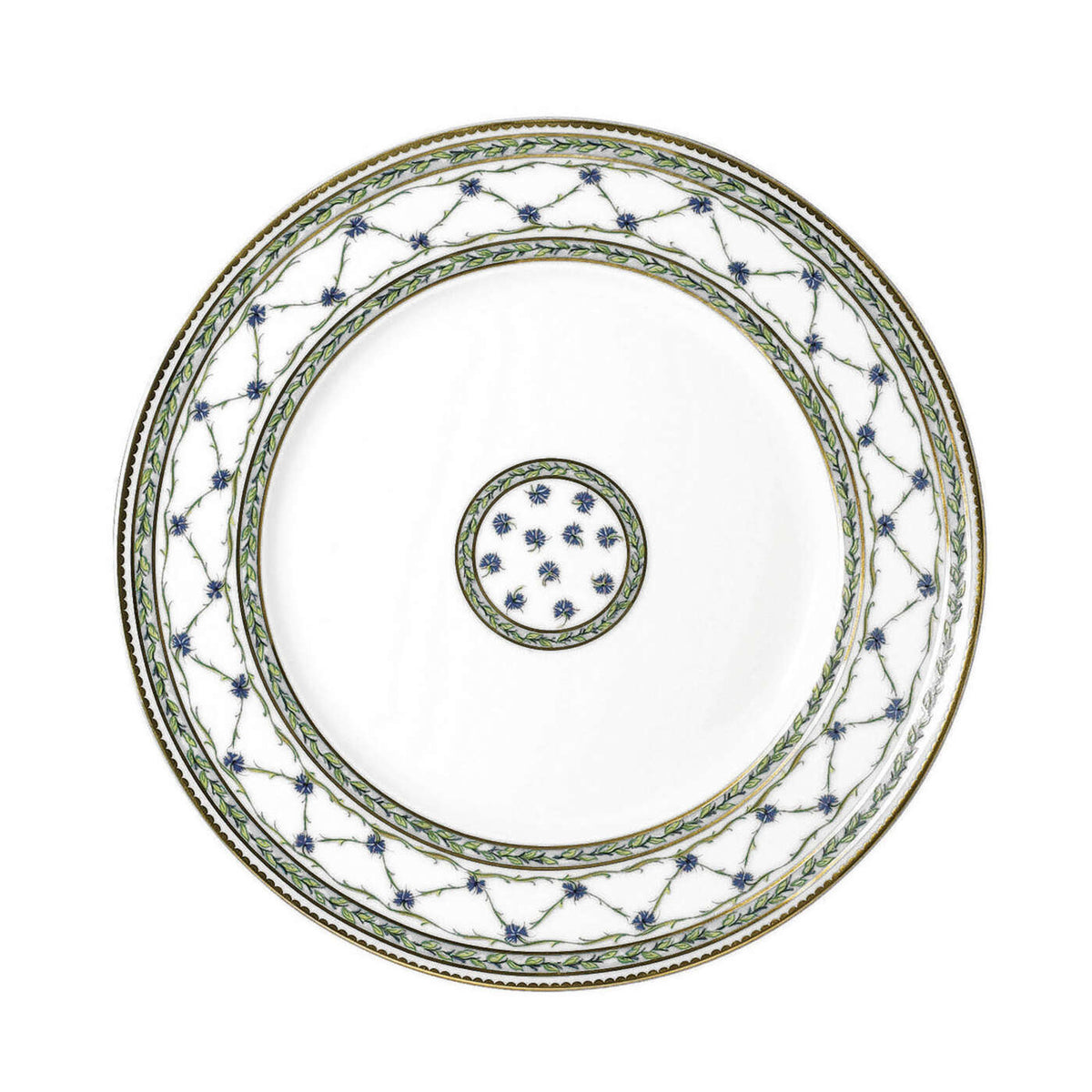
Raynaud's range continues with the stately Allée Royale, the nature-themed Histoire Naturelle, and patterns such as Minéral, Oskar, Trésor, Mazurka, Monceau and Touraine, each with its own character for the formal or the relaxed table.
Living With Raynaud
Raynaud patterns lend themselves to combining. A Minéral Irisé charger in one shade pairs naturally with plates in another, and Cristobal's colorways were designed to sit side by side on the same table. Raynaud dinnerware is the natural starting point, and teapots and cups from Raynaud tea and coffee and platters and bowls from Raynaud serveware build out the table over time.
Raynaud states that its decorations are dishwasher-safe up to 60°C (140°F), so choose a gentle, low-temperature cycle. For pieces trimmed in gold or platinum, a soft sponge keeps the precious metal looking its best, and keeping them out of the microwave protects the decoration.
Questions about Raynaud, a pattern or a missing piece? We are happy to help:
info@paristableware.com · (201) 652-4233