
















Heritage
The Vista Alegre Story
The Vista Alegre story begins with a piece of land beside the Aveiro estuary, near the town of Ílhavo. There a single family built not just a factory but a whole community around it, and two centuries later the name Vista Alegre still belongs to that place.
From a Chapel to a Royal Factory
José Ferreira Pinto Basto bought the Quinta da Ermida estate near Ílhavo in 1812, and in 1816 he acquired the Vista Alegre chapel and its surrounding grounds at public auction. On July 1, 1824, King João VI issued the royal license that allowed him to build a porcelain factory there, the first industrial plant in Portugal devoted to porcelain.
The early years were a search for the right clay. Because the composition of porcelain paste was still unknown in Portugal, the factory first made glass and soapstone pottery. The founder's son, Augusto Ferreira Pinto Basto, went to study porcelain at Sèvres, and in 1832 large deposits of kaolin were found north of Ílhavo. Around five years after its founding the factory had already received the title of Royal Factory, and in 1880 it stopped making glass to focus entirely on porcelain.
A Village Built Around Porcelain
From the start, Vista Alegre was more than a workshop. Construction of the workers' neighborhood began in 1824, and the site grew to include a theater as well as the chapel. The foreign artist Victor Rousseau helped establish a painting school there, and the late nineteenth century is remembered as a golden period for the factory. Today the factory, museum, chapel and theater still stand together on the same grounds.
The twentieth century brought renewal. The company invested in new technology, and in the 1980s it created an artistic orientation board and an art and development center. In 2001 the Vista Alegre group joined with the Atlantis group, which brought crystal and glassware back into the house, and in 2009 the company became part of the Visabeira group. In 2024 Vista Alegre marked its two hundredth anniversary, celebrated in the 200 Anos collection.
Designers at the Table
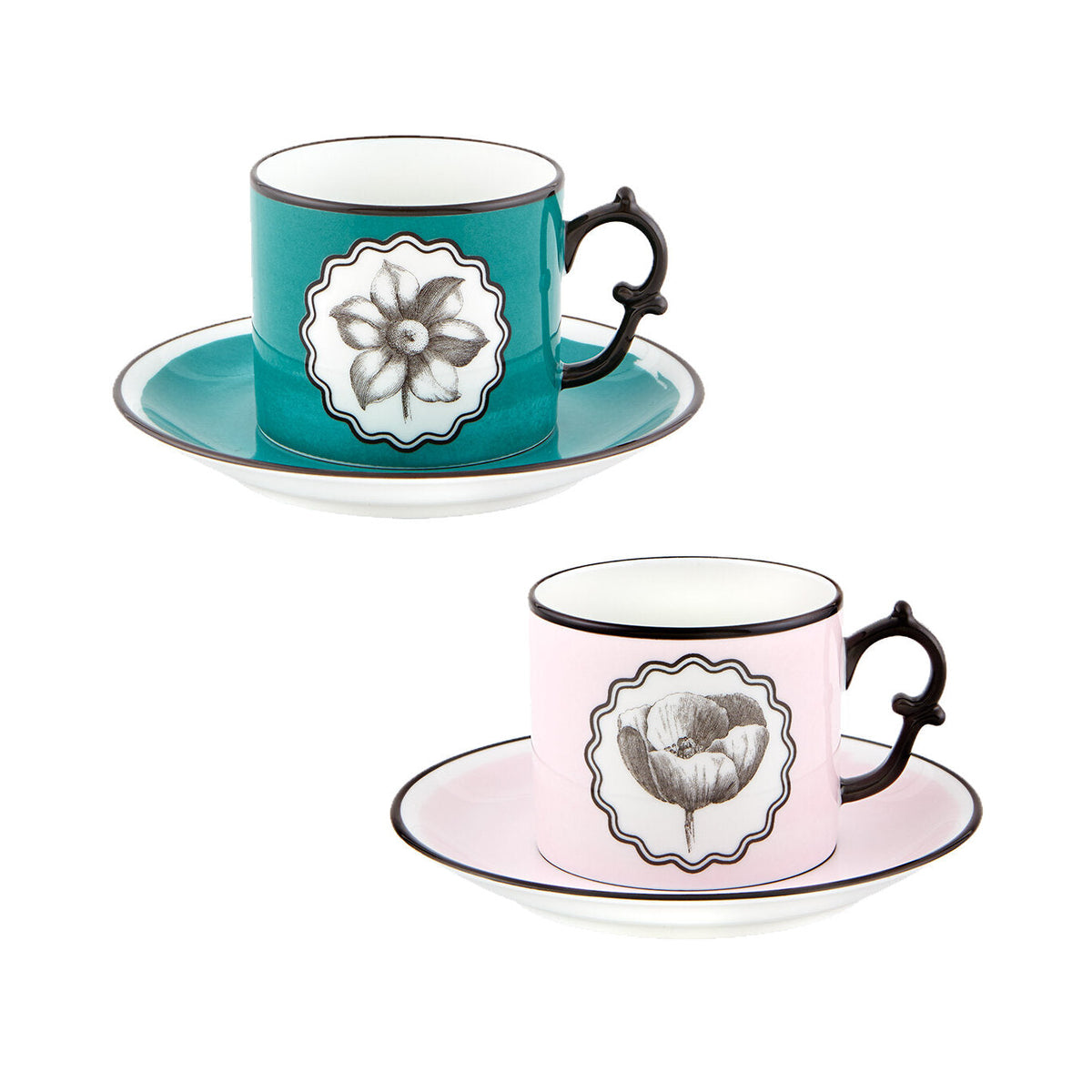
Much of what makes Vista Alegre feel current is its habit of inviting artists and designers in. The French couturier Christian Lacroix created Herbariae, a pattern inspired by old botanical herbariums. Five flowers, the poppy, narcissus, lotus, dahlia and thistle, appear in black and white with soft watercolor-like accents, and his Butterfly Parade brings butterflies to the same table. Both sit naturally among our Vista Alegre dinnerware.
Transatlântica, by the designer Brunno Jahara, was created for the year in which Portugal and Brazil celebrated each other, and its decoration honors the ties between the two countries across the Atlantic. It received an honorable mention at the German Design Award 2016. Other artists who have worked with the house include Joana Vasconcelos, Sam Baron and the writer Valter Hugo Mãe.
Alongside these collaborations, the range covers everything from Vida Alegre and Domo to Duality, Amazónia, Silkroad, Carrara, Bicos and Paço Real, so there is a Vista Alegre pattern for both a relaxed weekday breakfast and a formal holiday dinner.
Setting the Table
Vista Alegre works beautifully when classic and contemporary pieces meet. Start with a calm base, such as plain white or a quiet everyday pattern, and layer a decorated salad or dessert plate on top. Herbariae plates, for example, can be mixed and matched because each flower is a variation on the same botanical theme, and the effect looks collected rather than matched.
Our tea and coffee pieces carry the same patterns to the morning cup, while the serveware adds platters, bowls and tureens that can anchor the center of the table. To finish a setting, pair the porcelain with glasses from the barware collection and a coordinated set of flatware. The home decor pieces make thoughtful gifts and bring the same Portuguese craftsmanship to a shelf or console.
For porcelain with gold or platinum detail, the traditional advice holds: wash it by hand with a mild detergent, dry it with a soft cloth and stack plates with a soft divider. Cared for this way, Vista Alegre pieces are meant to be used often and kept for a long time.
Questions about Vista Alegre, a pattern or a missing piece? We are happy to help:
info@paristableware.com · (201) 652-4233